Showing posts with label Port Phillip Bay. Show all posts

Thursday, August 9, 2012

I said I was being Cruel!

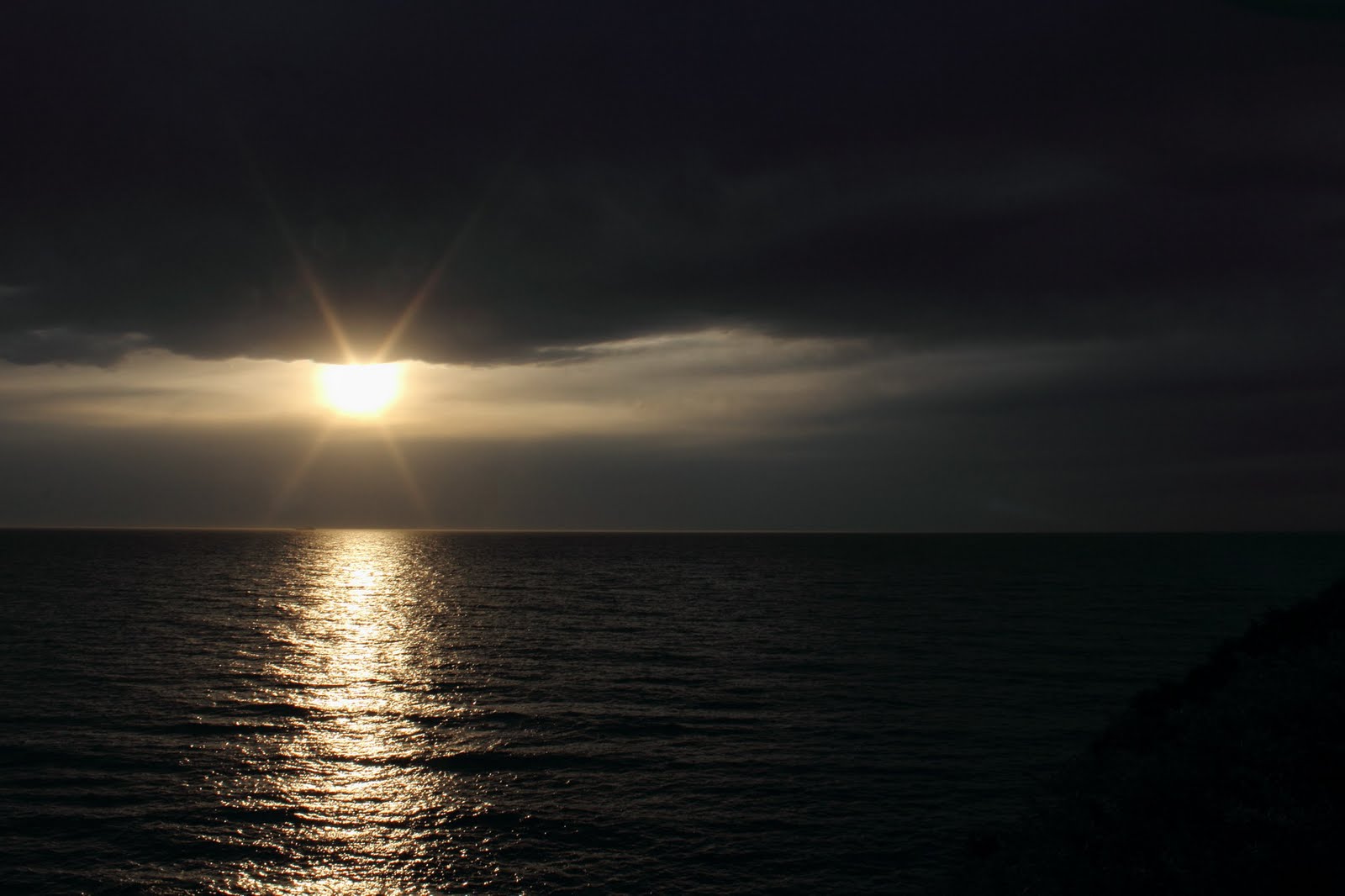
First up because I am not entirely without a nice side  here is my Piccie of the Day.
A sunset I caught on Port Phillip Bay some time ago.
Now back to my WIIW and my cruel side.

Everyone looked at this and guessed something knitted or crocheted.

Well I have to say You Are All Wrong!

I said I was being cruel!

I will give a clue: as usual it is an image cropped from one of my photographs, and it is an object I photographed inside my house.
Any more guesses?

Monday, September 26, 2011

A sampler. And a strange coincidence

Deb and I were away for the weekend. We have returned home to find our internet service reconnected. Phew!

In my last serious post I asked which you would prefer I posted about:

A: More waterfalls
B: Some majestic trees
Or
C: Sunlight through clouds?

Most of you replied D: all of the above.

I suppose I deserve everything I got.
Well I guess I am going to make you wait for more (at least until later in this post).

On Friday, I had an odd moment with my WIP.
As regulars know I work on my writing on the train during my commute.

I realized that the section I was redrafting was set exactly 70 years in the past!

It might not seem so odd to you, but my character (a young Russian woman) was facing a life and death situation in September 1941 as I wrote about her in September 2011.

It was the strangest feeling. I drafted this section well over a year ago and quite by chance I worked on a redraft 70 years after the event.

Has anything odd like that happened in your writing?


Now to my little poll. Because I am very nice I am going to give you a bit of ‘all off the above’.
Photo A: is of the Erskine Falls in the Otway ranges.

Here is a second from the base of the fallsPhoto B.
The stairs back up from the fallsAnd taken yesterday, a tree somewhere else in the Otway ranges (I might say more about that in another post)

Finally
Photo C: Port Phillip Bay just before sunset last weekendAnd a second from a different viewpoint about five minutes later.Where do I go next?

Tuesday, December 28, 2010

Fort Queenscliff Part II

I started posting about Fort Queenscliff before Christmas. Then of course I got distracted by my 200th post Q&A.

So in the tradition of my (semi-mythical) Uncle Harry I put on my tour guide’s hat and resume with a guided tour of Fort Queenscliff.

The Fort sits on the southern outskirts of Queenscliff guarding “The Rip”. The defences at Queenscliff and around Port Phillip Bay were built through the second half of the 19th century, to protect Melbourne from invasion by hostile foreign powers.
These hostile powers were identified as the French, the Russians and, at one stage during the American Civil War, the United States!

When you approach The Fort from the landward side you see a decidedly unimpressive brick wall that forms the rear defence. Originally there was a dry moat and there are dozens of loopholes for rifle fire from inside. But with my knowledge of military technology I was unimpressed. Yes the fort was built in the Nineteenth Century but it was clear that any force bringing even light artillery to bear on this wall would have quickly overcome these defences.

However, I wasn’t quite ready to write the fort off, it was after all designed to protect the entrance to Port Phillip Bay from the sea.

Inside the fort the tour starts with the interior buildings. One is the Black Lighthouse which I posted about previously. Standing next to this is an old signal tower. Fort Queenscliff was only one of a chain of forts built around the entrance to The Bay.
Any defence of Port Phillip Bay would have been coordinated by signals sent through this tower.

Next you pass this Georgian style building. Before The Fort was built this was the civilian post and telegraph office for the town. When the fort was built it was closed to civilians, the offices were shifted into the town. This building became part of the Fort’s hospital.

Then you approach what was the real business end of the fort. These bunker walls form the back side of a massive earth bank that is the front wall of the fort. Set into the bank are a number of heavy gun emplacements.
This is a Nineteenth Century “disappearing gun”And from below. The concept of the gun was that once it was fired it would drop out of sight so the crew could safely reload it. The massive hydraulic ram would lift it up to be fired again.

This is the latest in 19th century communication technology, a brass speaking tube to pass orders to the original magazines deep beneath the base of the guns.

Down below is a whole network of tunnels to allow communication and troops to move around The Fort while under fire.One feature I liked was the original brass oil lamps set in alcoves in the walls. These were locked behind glass to prevent accidents setting off the tonnes of high explosive that were once stored down here. The modern electric lights make things much easier

Back up top we then saw the emplacements built for twentieth century shore battery guns.Impressive until you realise they are dummies. The shield is the original from gun that was sited here in the 1930s, but the barrel is a fake.
With World War II there was a sudden realisation that Japanese naval air-power could easily target these guns. So they were moved to camouflaged positions near Point Lonsdale. The dummies were placed so enemy aerial reconnaissance or spies would report the guns were still in place and waste effort targeting a ruse.

This final photo is of the command bunker used in WWI and WWII.Allegedly the first angry Allied shots of WWI were ordered from here when a German merchant vessel attempted to make a run for the open ocean.

By the 1880s Port Phillip Bay was the most heavily defended port anywhere in the British Empire. Would anyone care to guess why?

Uncle Harry signing off.

Sunday, October 31, 2010

Swan Watch XII: Another Wet Weekend

The wet weather continues down this way. In fact it has poured on and off all weekend. Not to be deterred Deb and I went for drives on both days. Although I have to say with all the rain and mud there was no hiking this weekend.

On Saturday we headed up the Yarra valley. I had to pause near Yarra Glen to catch these piccies as the storm clouds swallowed up the distant mountains.Today we headed out again this time down to Port Phillip Bay.For a brief moment we had a glimpse of blue sky. But the muddy colour of the water is a direct result of all the runoff flowing into the bay with the continued rain.We attempted to go for a short walk but just a little way down the coast the sky got so dark again we beat a hasty retreat back in the direction of the car.
I was amazed by just how black the sea was below the clouds.

No wonder with all this rain local rivers like the Plenty River are threatening to break their banks.Now to the Swans.
On our way home we paused briefly to catch a couple of photos. And I mean a couple, it was raining again and my camera is simply not waterproof. When I have a spare $2500 I’ll buy a new one :-)
As you can see from these hastily snapped shots Mother and baby are still well.

Baby is starting to look a bit more handsome again as its scrappy down is covered by a fresh coat of feathers. He/She won’t get that glossy adult black until after a couple more moults.

Now a final word about Veiled in Shadows, thank you all for your kind words. Also thank you for those of you who have offered to review it for me.

For those of you who missed Friday’s post my book is available on Amazon and you can read an extract here .

I am thinking of posting additional extracts over coming weeks, what do you think?

Monday, March 15, 2010

A Question of Time

On Saturday afternoon Deb and I went for a drive.
Unusually we didn’t head away from the city, rather we went through Melbourne to one of the old Melbourne ports Williamstown.
I have been there a couple of times before when I went down to have a look at the old RAN minesweeper HMAS Castlemaine.

This time we went down to the point that juts out into Port Phillip Bay. It was here that I took some shots of this tower.

I posted quickly on Saturday asking if anyone could guess the purpose of the tower. There have been some great guesses, but no on has been quite on the money.

If you zoomed in on the piccie you may have noticed this unusual piece of equipment on the roof.
It consists of a large ball that can be moved up and down on a mast.
This odd contraption is known as a “Timeball”.

What is a timeball you might ask?
Well before the days of GPS and radio beacons ships navigated using celestial navigation.

Dava Sobel outlined in her book Longitude how the difficulties of calculating longitude were solved using navigation based on accurate chronometers. The chronometers needed to be checked periodically to ensure precise navigation. This tower was part of that system.

The Timeball was designed so it could be easily seen by ships well out in the harbour. Every day at exactly 1:00 pm the ball was dropped. The ship’s officers responsible for navigation observing from a distance could set their chronometers.

Originally the time the ball was dropped was calculated by an attached observatory. Later, once the electric telegraph connected Victoria to England, the ball was dropped based on signals sent out from the Greenwich Observatory in England.

The time service here was finally discontinued in 1926, by then most ships set their clocks using a radio link.

So there you go mystery solved. Here is a link to a Wikipedia article on timeballs.

From the tower we strolled the short distance to the foreshore where I took this piccie of the CBD peeking around some fuel oil tanks.

Out on the bay plenty of boats were taking advantage of the glorious weather.
We strolled along the shore, most of the way along here there seem to be almost as many shells as there is sand.

I stopped again to capture this shot of the city complete with a casual fisherman.

One of the most colourful boats came close to the point.

Deb insisted on borrowing the camera and took this shot of me.

Another shot of the city silhouetted against the sky beyond.

Finally, we wandered down the main street of Williamstown, where the shops are still all in Nineteenth Century buildings.
We stopped for a treat, ice-cream!

Thursday, October 22, 2009

The Light, Fantastic!

I haven’t posted for some days, it has been mad at work. To add to my woes, on Monday I was the victim of an assault. A man who has been using our service unfortunately had his bag stolen on our premises. I was on the spot and became the target as he vented his frustrations. He punched me on the jaw before I could move out of his way.
I hasten to add that I was not significantly injured (a minor bruise to the right side of my jaw).

Including Monday, I have been assaulted four times in the past decade. In addition I have witnessed a number of assaults on colleagues and clients. Unfortunately, this sort of event is a risk of working on the frontline of many community services.

In a situation like this there are two main issues: physical injuries; and the potential for psychological trauma. Neither can be taken lightly. Ten years ago for example, it took me twelve weeks to recover from injuries I sustained in an assault. On that occasion I also had symptoms of PTSD for months after. Over the years I have lost a number of colleagues, in a number of workplaces, due to stress related conditions (PTSD, anxiety disorder, depression) caused by actual violence, threatened violence, or verbal aggression and abuse.

In my experience there are several factors that minimise the impact of such trauma on people: personal resilience; a mutually supportive team environment; debriefing support and counselling as necessary (and for as long as necessary).
The first two are taken care of: I am reasonably resilient and have learnt (and taught) skills to cope with stress; and my team are a great bunch, who all step forward to support each other. As to the debrief (and counselling), well that hasn’t been handled so far. I’ve done my bit in terms of reporting the incident. But the silence from head office is deafening.

This is problematic to say the least. Don’t get me wrong in this instance I’m OK.
BUT and this is a very big but, overall long term outcomes for staff in these high stress workplaces depend on good institutional responses to such problems. I’ve worked for agencies that have excellent procedures and some with truly abysmal ones and the difference in staff outcomes is marked.

I’ve only been with the agency I’m with since earlier in the year and haven’t had to put their system to the test until recently (for Greg and now this incident). I’ll keep you posted.

Now I have had enough of that business.
To lighten the tone I am going to share a fair number of my piccies The only unifying theme will be light and my attempts to catch different scenes under different conditions.

This first photo is of some Silver Gulls wheeling overhead at Port Phillip Bay one sunset. The movement of birds in the foreground captures the vitality of these gulls. These birds are actually snowy white, the setting sun has dipped them in gold.

This picture was taken in broad daylight but the dappling of the canopy brings out the greys and whites of this big old Snow Gum’s bark.

I’m cheating a bit with this piccie as I’ve used it in an earlier post. It’s of evening light over Lake George in NSW. This time of day can be magic almost anywhere in the world, but I feel there is a subtle quality to the light in Australia that I have yet to see elsewhere.

This is one I took last weekend, I didn’t use it in my last post but on looking at it again I find the quality of the light in this pic amazing. To my eye it almost has the feel of a watercolour.

This one is taken looking west over Port Phillip Bay late afternoon in winter. I have deliberately underexposed this piccie to catch the sun, but it was fairly dim anyway.

The bricks of Old Ballarat Gaol looked warm in the sunset on this cold autumn day at Easter.

This normally unprepossessing pylon is tinted orangey red by another sunset. It is actually painted in a dark dull-grey colour.

The next two were taken at Wilsons Promontory in July. The first shows the setting sun, again under exposed.
The second shows a headland and two islands out to sea in the pale watery winter sunset. The dead shrubs and the burnt area in the foreground are more evidence of the February Bush Fires.

Once again sun warmed bricks in the ruins of Pascoe Vale Uniting Church.

The glare of a high summer sky lights the sandstone and wrought iron gateway of the Sydney Botanical Gardens.Finally an Aussie icon basks in the sun on Australia Day 2008.